




What Makes a Castor “Heavy Duty”?
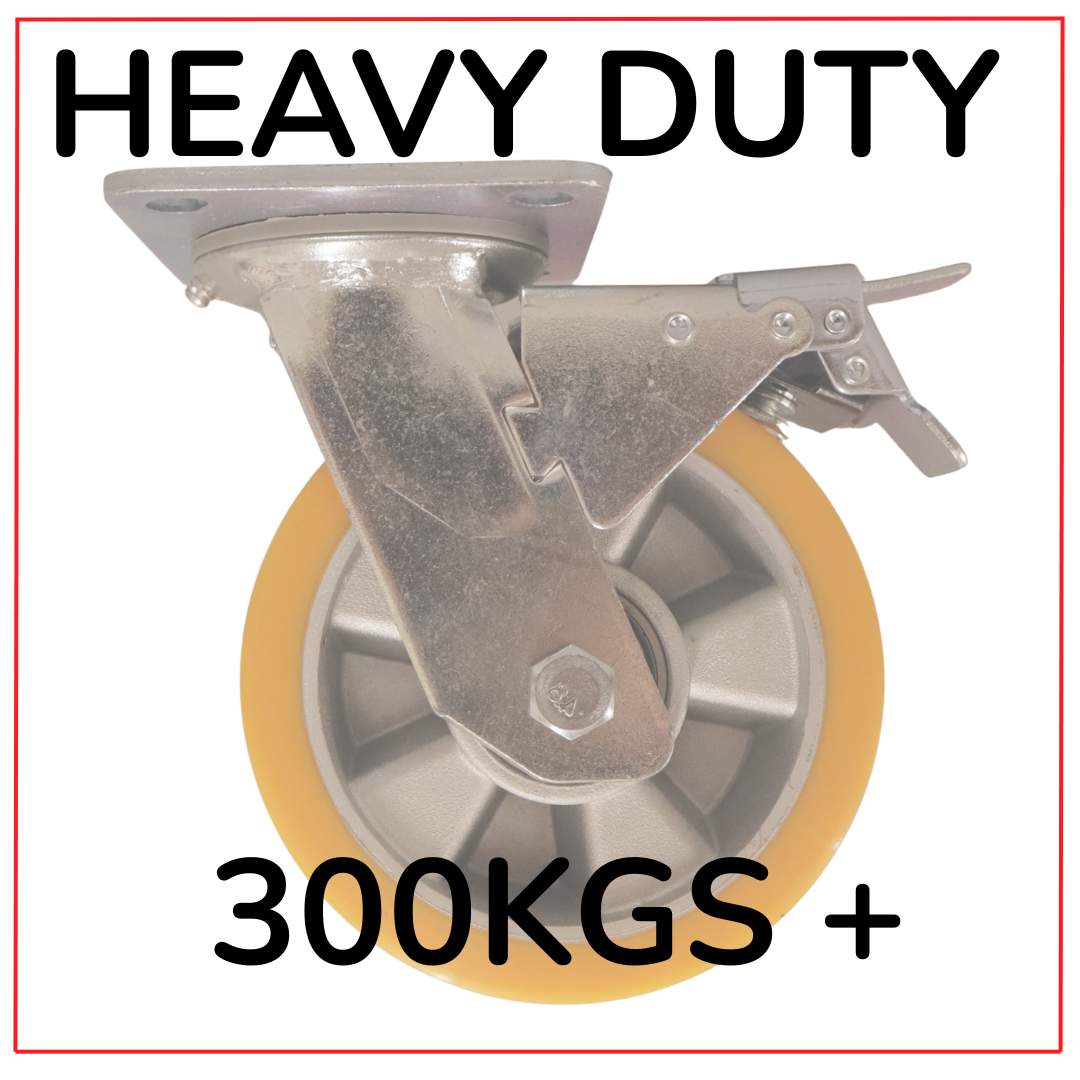
The term gets used loosely, but in practice, heavy duty castors are engineered to handle sustained loads of 250kg per wheel and above — some going well beyond that for specialist applications.
It’s not just about the load rating though. The construction matters too:
- The wheel material needs to handle both the weight and the surface. Polyurethane and nylon are popular for warehouse use; cast iron or steel is more common in extreme industrial environments.
- The mounting plate or stem needs to be beefy enough that it won’t flex or shear under lateral force.
- The bearing type determines how smoothly and reliably the castor will roll under load. Ball bearings are generally preferred for heavy duty use — they’re more efficient and last longer than plain bore (sleeve) bearings under repeated heavy loading.
A castor that’s borderline rated for your load will work fine for a while — and then wear out much faster than one with appropriate headroom. Buy for the realistic maximum load, not the average.
Best Applications for Heavy Duty Industrial Castors
Heavy duty castors are used across a huge range of industries in New Zealand. Some common applications we supply for at Vartec Industrial:
Workshop workbenches — A properly castored workbench gives you the flexibility to reconfigure your space. Locking castors mean it stays put when you need it to and moves when you don’t.
Industrial trolleys and trolley carts — Whether you’re moving stock around a warehouse or shifting equipment across a factory floor, the right heavy duty trolley wheels make the job safer and easier. Heavy loads + poor castors = tipping risk.
Manufacturing and processing equipment — Machinery that needs to be repositioned periodically is much easier to manage on quality swivel castors. High temperature castors may be needed depending on proximity to heat sources.
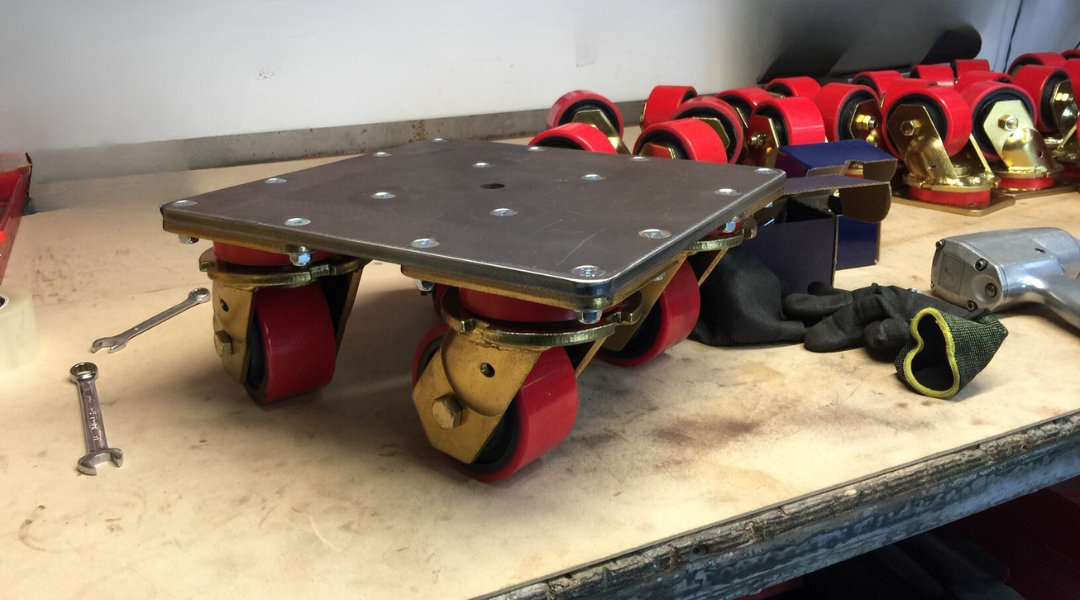
Pallet movers and dollies — Low-profile heavy duty castors designed for dollies and furniture movers need to handle the load without adding unnecessary height.

Swivel or Fixed for Heavy Equipment?
For heavy industrial applications, this decision matters more than it does for light use.
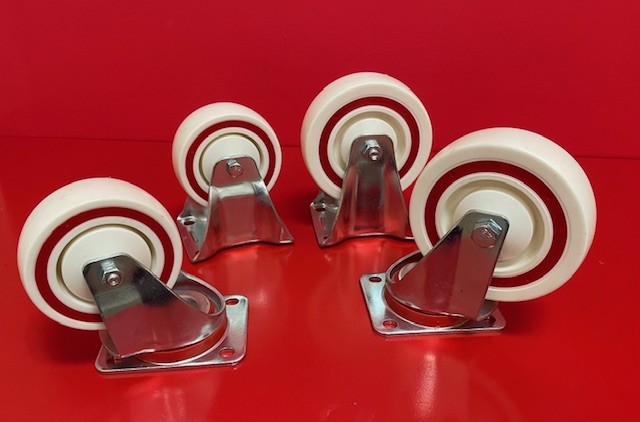
Fixed castors are stronger for the same size because they don’t have the swivel mechanism to worry about. If you’re moving equipment mostly in straight lines, you can often use smaller fixed castors and get a stronger result than with swivel castors of the same diameter.
That said, maneuverability is valuable in most workshop and warehouse settings. A typical setup for a heavy trolley cart is two fixed castors at the back and two swivel castors at the front — giving you directional control and turning ability without sacrificing strength.
If you’re loading extremely heavy equipment and movement is infrequent, consider levelling feet or heavy duty levelling castors that can be wound down to take the load off the wheels when stationary. This protects both the castors and your floor.
Why Your Floor Matters When Choosing Castors
This is one of the most overlooked parts of castor selection. The hardest, largest wheel will roll most efficiently – but it will also transfer the most stress to your floor surface, which matters if you’re on epoxy, timber, or other surfaces that can be damaged.
For concrete warehouse floors, nylon or cast iron wheels are fine. For smoother or more delicate surfaces, polyurethane is usually the better call — it handles the load without chewing up the floor.
If you’re working on an uneven surface (cracked concrete, ramps, gaps between panels), a larger wheel diameter helps a lot. Small wheels get caught in every imperfection; a 150–200mm wheel rolls over most minor obstacles.
How to Calculate the Right Load Rating
A quick note on calculating what you need:
Take the total weight of your load (including the trolley, cart, or equipment itself). Divide by the number of castors — typically 4. Then apply a safety factor of at least 1.3 to 1.5 to account for uneven loading, momentum from rolling, and the fact that not all four castors will always share the load evenly.
So a 600kg trolley on four castors = 150kg per castor nominal. With a 1.5 safety factor, you’d want castors rated to at least 225kg each.
If the equipment will be used on ramps or pushed at speed, increase the safety factor further.
Come Talk to the Team
At Vartec Industrial, we stock a full range of heavy duty castors – from standard plate-mount swivel castors for trolleys and carts through to high temperature and specialist industrial options.
Our showrooms are in Albany (North Shore Auckland) and at Calmac Engineering in Papatoetoe, and we sell direct to trade and public. If you’re not sure what spec you need, come in and we’ll work through it with you – or give us a call.
Getting the castor right the first time is a lot cheaper than replacing them after the job’s already been done.